

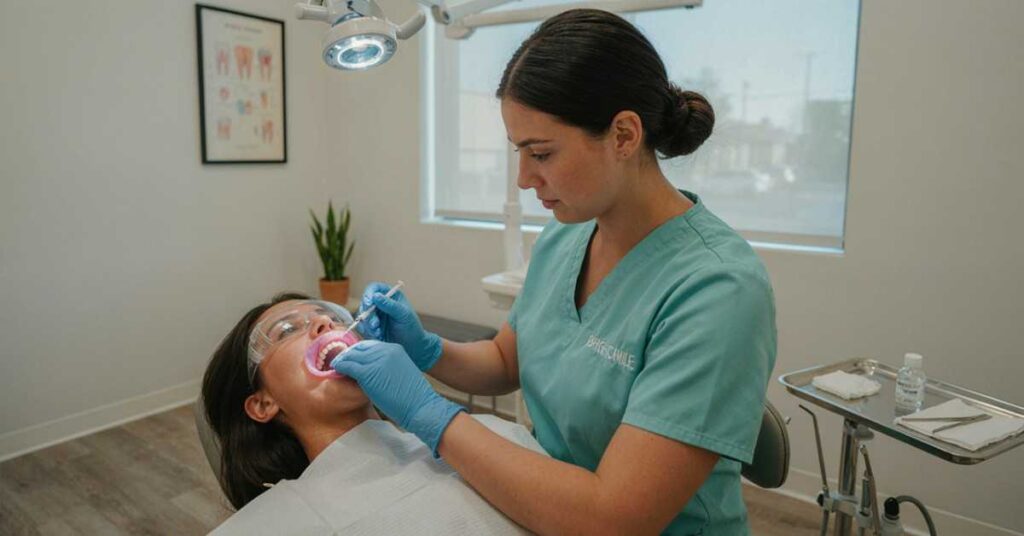
If you want a brighter smile, you shouldn’t hesitate every time that you sip chilled water. That’s the issue a lot of people come out on when they begin looking into tooth whitening. If your teeth are susceptible to hot coffee, ice cream or simply a cool breeze, the thought of adding a teeth whitening procedure on top can feel risky. The good thing is the best whitening for sensitive teeth isn’t a hoax or a marketing gimmick. It is simply a matter of a variety of particular, well-understood substances that do the visible whitening, while a second set of ingredients that quietly protect your nerves. Once you know what to look for, grabbing a product (or a treatment strategy with your dentist) is much less confusing.
Why Whitening Causes Sensitivity in the First Place
Before delving into ingredients, it would be good to understand the “why.” Whitening works by allowing peroxide molecules to seep through enamel and split apart the pigment molecules that result in marks on your teeth. It also creates short-term, minute channels in the enamel called tubules, which are immediately above the nerve of the tooth. When those tubules are exposed, heat, cold, or sweet stimuli can reach nerve cells faster than normal, and one can get that intense, brief zing of sensitivity. For most people this is temporary, yet it is severe enough that many decide to give up on whitening completely. Special formulas created for teeth that are sensitive are designed expressly to reduce this impact.
The Whitening Agents: What Actually Lifts the Stain
- Carbamide Peroxide (Lower Concentration) Carbamide peroxide breaks down into hydrogen peroxide in the mouth, though slower. This less rapid release is simpler on the nerve ends of the tooth, but still effective. This is why many generic sensitive teeth therapies use carbamide peroxide in a lesser concentration, commonly 10 to 16 percent, in contrast to the greater amounts utilised in specialised in-office treatments.
- Hydrogen Peroxide (lower concentration) hydrogen peroxide is the most direct whitening agent and tends to operate faster. For sensitive teeth, dentists will usually recommend lower dosages, shorter wear times or shorter seated application to achieve brightening results without overpowering the tooth.
- PAP (Phthalimidoperoxy Caproic Acid) A novel peroxide-free whitener that’s making waves in the market for the capacity to target stain molecules without getting as deeply into tooth structure. It doesn’t rely on the process of hydrogen peroxide, so it tends to induce much less sensitivity, though the results can be slower.
The Protective Ingredients: What Keeps Nerves Calm
- Sodium Nitrate represents the most studied calming substance found in whitening products. Potassium nitrate calms the nerve strands inside the tooth, basically turning down volume on pain impulses before they recognise pain. This is how this is an ingredient in many toothpastes for sensitive teeth.
- Fluoride Fluoride doesn’t numb the nerve, but it does strengthen and restore enamel, helping close up those exposed tubes faster after a bleaching session. This is why fluoride is commonly added, either mixed in with the whitening gel or as a different treatment that is administered afterward.
- Amorphous Calcium Phosphate (ACP) ACP helps to rebuild the mineral structure of enamel with fluoride. You often see it in professional whitening products, because it helps prevent some of the temporary loss of minerals that can occur as you whiten.
Professional vs. At-Home Options
If you have mild sensitivity, start with at-home bleaching kits with a lower peroxide concentration and have built-in desensitizers. But the more aware one is, the better off you are likely to be under the supervision of a dentist where the concentration, the period of application and the procedures of calming down may be customized to the individual. Dentists may also paint a barrier in the gums and use custom fitting trays to make sure the whitening gel just touches the surface of the tooth, which reduces irritation.
If you’re searching for treatment options close by, many patients go for Local Same Day Dental Care when they want a teeth whitening consultation and do not want to wait weeks to get an appointment. A few others, especially elderly patients, opt directly for Dental Care for Seniors Roswell due to shifts in enamel and gum sensitivity with age that might call for a more specific approach. And if you don’t have dental coverage, it’s worthy of mention that many practices providing dentists without insurance in Roswell still have sensitivity-conscious whitening efforts that match an array of budgets and comfort levels.

A Few Precautions Worth Knowing
- Stay wary of whitening products that fail to disclose their peroxide levels, as this makes it hard to figure out the true strength of the recipe.
- Before starting any teeth-whitening treatment, contact your dentist if you have gum recession, exposed roots, or broken teeth, as these conditions raise the risk of sensitivity.
- In between treatments, give your teeth a rest. Overuse of whitening procedures, even mild ones, could in the end damage enamel.
- In the weeks before treatment, mix whitening with a sensitive toothpaste to help build some resistance.
Frequently Asked Questions
1. Can I whiten my teeth if I already have sensitive teeth?
Yes. Most persons with sensitive teeth can nevertheless whiten safely using less harmful solutions that include calming substances like sodium nitrate and fluoride. It’s just about selecting a suitable product or asking the dentist for a tailored plan.
2. What is the most common ingredient added specifically for sensitivity?
Potassium nitrate is the most prevalent ingredient used to quiet nerve activity within the tooth, which explains why it’s in both bleaching gels and regular sensitive teeth toothpaste.
3. How long does it take to see results with a gentle, sensitive-teeth whitening formula?
These formulae use smaller amounts, thus results tend to develop gradually. Most consumers notice a noticeable distinction after a couple of weeks of constant use, as compared to a few days with thicker, non-sensitive formulas.
4. Are professional in-office treatments safer for sensitive teeth than at-home kits?
They can be, mostly as a dentist can better control the focus, the timing and the protective procedures. In-office treatments can include gum barriers and sedative applications, which most at-home kits don’t include.
5. What should I do if my teeth are still sensitive a few days after whitening?
Some mild pain for a day or two following the treatment is usual. If it persists, a fluoride wash or potassium nitrate based toothpaste can be useful. If the discomfort lasts over a week, it’s recommended to see your dentist to rule toward any underlying concerns.
About the Author
Dr. Salwa Hammoud, DDS Graduated from USC School of Dentistry. Based in Atlanta, she’s passionate about the comfort of patients and education, merging precision with an eye for beauty. She believes dentistry is both science and art and loves assisting her patients to feel informed, confident, and cared for at each visit to create smiles that are healthy and beautiful.
1875 Old Alabama Rd., Ste. 130
Roswell, GA 30076
Phone: 404-595-1840
Email: staff@roswellcompletedentistry.com


