

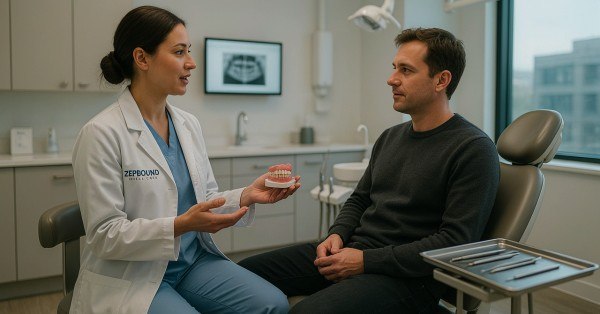
Patients on Zepbound (tirzepatide) keep asking us the same thing: is this medication hurting my teeth?
Here is the honest answer. Zepbound is not proven to damage teeth directly. But it changes how you eat, drink, and digest, and those changes can put your mouth under stress. This post covers the Zepbound teeth side effects worth watching for, what the research says, and what you can do about them.
What the evidence shows so far
Tooth decay is not listed as a recognized adverse effect in the FDA-approved prescribing information for Zepbound or Mounjaro, and clinical trials did not flag dental caries as a safety signal. So if you’re wondering whether Zepbound causes tooth decay, the direct answer is no.
The indirect answer is more complicated. A narrative study released in 2026 stated that causes of issues that patients label “Ozempic mouth” and “Ozempic teeth” as nausea, vomiting, belching, decreased fluid intake and possible changes in salivary function. A starting point of semaglutide and tirzepatide proved reassuring, since these medications do not significantly raise the risk of oral health disorders at least. “The biological mechanisms behind these oral complaints are largely unknown,” one ongoing trial reads. How the drugs impact saliva is still being examined by researchers.
In other words, science hasn’t caught up with what patients report. Until it does, prevention is the smart move.
Dry mouth is the big one
If Zepbound teeth problems show up, dry mouth is usually where they start. It isn’t among the most common Zepbound side effects in trials, yet many people report it, especially in the first weeks or after a dose increase. Drinking less, plus fluid loss from nausea or diarrhea, likely plays a part.
Saliva does more than simply keep your mouth moist and comfortable. It rinses away food, buffers acid, and supplies the minerals that repair enamel. When it drops, susceptibility to cavities, mucosal discomfort, and gum disease can go up. Bad breath and yeast infections in the mouth often follow.
Sensitivity, decay, and enamel wear
Zepbound and teeth sensitivity often show up together. When enamel thins or gums recede, the softer layer underneath is exposed, and cold water or a sweet snack can sting.
Two habits make this worse without anyone noticing. The first is constant grazing. When your appetite is low, small frequent snacks or sweet drinks feel easier than meals, but they keep sugar and acid on your teeth all day. The second is stomach acid. Vomiting and reflux wash acid over enamel, and repeated exposure wears it down.
Some patients also report a metallic taste or unusual grinding. These reports are anecdotal for now, but mention them at your next visit.
Can Zepbound cause mouth sores?
Not as a known effect. But a dry, irritated mouth is more vulnerable to sores, and reflux or a yeast overgrowth can cause them too. Any sore lasting more than two weeks needs a professional look.
Zepbound and dental work
If you have a filling, crown, implant, or extraction coming up, tell us you take Zepbound. The medication slows stomach emptying, which is why some providers give extra fasting instructions before sedation. Please don’t skip or stop doses on your own. Your prescriber and dentist can coordinate.
Recovery matters too. Healing after dental work depends on protein, vitamins, and fluids, and those can run low when you’re eating much less.
One more point in your favor: if you have type 2 diabetes, your baseline gum disease risk is already higher, and many people prescribed GLP-1 medications have that condition. Regular cleanings matter even more.
What to do about it
Drink water all day long, and extra in the days shortly after your injection. Chew some gum sans sugar with xylitol to help keep saliva flowing freely. After you vomit, rinse by water and wait around one hour before brushing so you don’t scrub loosened enamel off. Use fluoride toothpaste and ask us concerning a prescription-grade one if you’re at higher risk. Sip your sweet and acidic liquids for hours, instead of limiting them to mealtimes. Try to get some protein and calcium even if you don’t feel hungry. And keep your cleanings up to date, every six months or more often if we suggest it.
Call us if you notice dry mouth that won’t quit, new sensitivity, bleeding gums, loose teeth, white patches, or sores that linger. You can also report any side effects to the FDA through its MedWatch program.
Conclusion
Zepbound isn’t known to harm teeth on its own. The risk comes from what happens around it: dry mouth, acid, snacking habits, and less nutrition. Those are manageable when you catch them early, and your dentist is the person best placed to do that.
If you’re taking Zepbound, or thinking about it, book a checkup with the team at Roswell Complete Dentistry. We’ll look at your teeth and gums and build a plan around your medication.
Frequently Asked Questions
1. Does Zepbound affect teeth?
Not directly, based on current labeling and trials. Dry mouth, reflux, and diet changes can affect them indirectly.
2. Does Zepbound cause tooth decay?
It isn’t a recognized cause. Dry mouth, frequent snacking, and acid exposure can raise your risk.
3.Why are my teeth sensitive on Zepbound?
Enamel wear, gum recession, or dry mouth are common culprits. An exam will show which one it is.
4. Can Zepbound cause mouth sores?
It isn’t an established side effect. Dehydration, reflux, or infection can cause them, so have persistent sores checked.
5. Should I tell my dentist I take Zepbound?
Yes, always. It affects how we plan sedation and what we watch for in your mouth.
6. How long does Zepbound dry mouth last?
Many people improve within a few weeks, though it can return after a dose increase. Tell your prescriber if it continues.
7. Is dental work safe on Zepbound?
Generally yes. Share your medication list and follow your care team’s fasting and dosing guidance.
About the Author
Dr. Salwa Hammoud, DDS, earned her Doctor of Dental Surgery degree from the University of Southern California School of Dentistry. Originally from Michigan and currently located in Atlanta, she is known for helping patients feel comfortable and knowledgeable at every visit. She became a dentist because she enjoys seeing people smile, and she regards dentistry as both a science and an art. Dr. Hammoud operates at Roswell Complete Dentistry.
1875 Old Alabama Rd., Ste. 130
Roswell, GA 30076
Phone: 404-595-1840
Email: staff@roswellcompletedentistry.com


One Response