

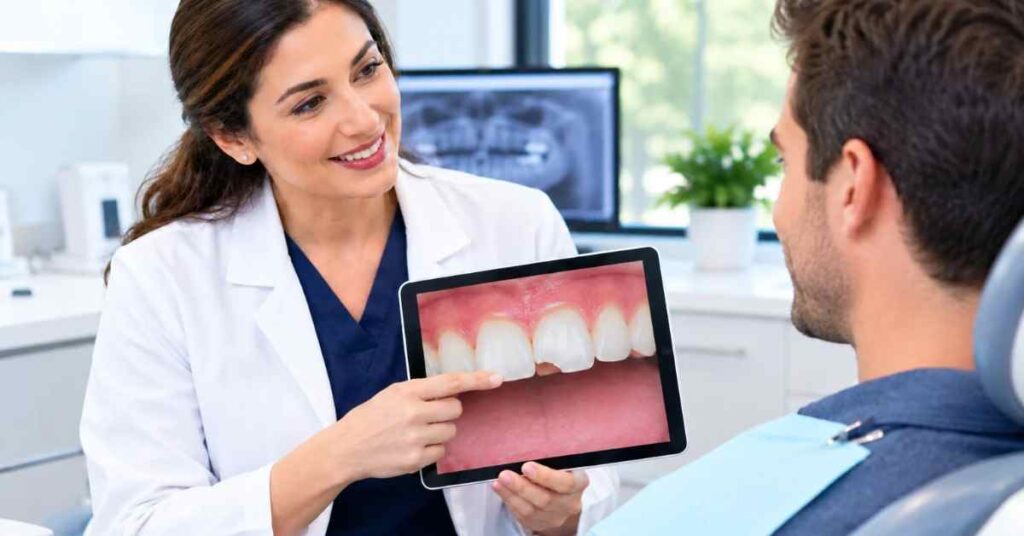
Biting down on hard candy, getting elbowed by someone during a game of basketball, or running one’s tongue over a rough edge after supper – a chipped or fractured tooth can happen to anyone and, unfortunately, it rarely comes at a good moment.The first several hours are crucial. What you do immediately can sometimes help with pain, defend the nerve and perhaps save the broken fragment. If you break or chip a tooth, this post will help you know what to do, what to not do, when it becomes an emergency and how a dentist will repair the damage.
Why Teeth Chip or Break
Enamel is the strongest substance within your body, but it’s not unbreakable. Common causes include biting hard items such as ice, almonds or popcorn seeds, falls, automobile accidents and sports injuries. Cavities, large old fillings, erosion on the enamel or grinding teeth at nite weaken teeth, so they’re quite more likely to break down, usually while doing something as commonplace as biting into a sandwich.
Types of Chipped or Broken Teeth
Not every break is the same, and the type of damage decides the treatment.
- Minor enamel chip: A small piece of the outer layer breaks off. It often causes little pain but can leave a sharp edge.
- Cracked tooth: A crack runs through the tooth, sometimes below the gum line. Pain when you bite down or release pressure is typical.
- Broken cusp: The pointed chewing surface breaks away, often around an existing filling.
- Fracture reaching the nerve: The break exposes the pulp inside the tooth. Expect sharp pain and sensitivity to air, hot, or cold.
- Split tooth: The tooth separates into two parts. Whether it can be saved depends on how far the split extends.
What to Do Right Away
Stay calm and work through these steps while you arrange to see a dentist.
Rinse your mouth gently
Clean any debris away with warm water and inspect for damage. Look for rough edges, bleeds, or a pink or red patch inside the tooth that can indicate an exposed nerve.
Save the broken pieces
If you are able to find the piece, drop it in a tiny bottle of milk as well as saliva and bring it with you to your appointment. In accordance with the break, sometimes your dentist can bind the break back in place.
Control bleeding and swelling
Put clean gauze on any place that’s bleeding for roughly 10 minutes. Put a cold compress on the cheek or lip on the side of the tooth to help reduce swelling and relieve discomfort.
Manage pain safely
An over-the-counter NSA may help. Follow the label properly and see a pharmacist or doctor prior to use if you take other drugs or have health conditions.
Cover sharp edges
A jagged tooth may slash your tongue and face. You can cover the edge via dental wax or a small piece of sugar-free gum, until you are seen.
What Not to Do
- Don’t chew on that side. Biting down can turn a small crack into a split tooth. Stick to soft foods on the other side.
- Don’t use super glue or other home fixes. They aren’t safe for your mouth and make professional repair harder.
- Don’t ignore it because it doesn’t hurt. A chip exposes softer layers of the tooth to bacteria, and a hidden crack can spread.
- Avoid very hot, cold, or sugary foods and drinks. If the inner layers are exposed, they can trigger sharp pain.
- Don’t try to push a knocked-out tooth back with force. Keep it moist in milk and get to a dentist immediately.
When a Broken Tooth Is an Emergency
See a dentist the same day for severe pain, bleeding that won’t stop, swelling of the face, an exposed nerve, fever, bad taste or a swollen run on the gum, or an open or knocked-out tooth. These may be indicators of a nerve injury or an infection that may take longer to treat the longer you wait. If you have difficulty breathing or swallowing well due to the swelling, go to the local ER.
At Roswell Complete Dentistry, emergency dental care is a priority. Call before noon and you can be seen the same day! If you don’t have insurance, you can have an emergency exam with a problem-focused X-ray for $79. We’re open Monday thru Thursday 8am to 5pm, Friday 8am to 2pm. You can book online any time, including after hours.
How We Repair a Broken Tooth
Your scheduled time begins with a thorough examination and digital imaging to assess the extent of the damage, including voids that are not visible to the eye. We show you what we do uncover and explain all options before anything occurs. Same-day dentistry can provide several fixes, leading to fewer visits and quicker relief.
Bonding or filling
For small to moderate chips, tooth-colored resin is shaped and hardened onto the tooth. It blends with your natural color and is usually done in a single visit.
Dental crown
When a large portion of the tooth is lost or cracked, a crown covers the whole tooth, restoring its shape, strength, and appearance.
Root canal therapy
If the nerve is damaged or infected, a root canal removes the affected tissue and seals the tooth, relieving pain and saving the tooth. A crown typically follows to protect it.
Extraction and dental implant
If a tooth is split below the gum line and can’t be saved, removal may be necessary. A dental implant can then replace it with a permanent, natural-looking tooth.
If dental visits make you nervous, tell us. We offer sedation options and take time to walk you through each step so you feel informed and comfortable.
Cost and Payment Options
How much it costs depends on the damage. Bonding is usually the cheapest repair, while crowns, root canals and implants are more expensive. We accept most major PPO plans including Aetna, Cigna, Delta Dental and MetLife. We’ll review your insurance before treatment so that there are no surprises. If you don’t have insurance, we also have the Blueprint Smiles Membership that has unlimited emergency checkups and various payment options through CareCredit, Sunbit, and Cherry. Rates and offers are subject to change, so be advised to check details when you call.
How to Prevent Chipped and Broken Teeth
- Wear a mouthguard for contact sports, or a custom night guard if you grind your teeth.
- Skip ice, hard candy, and pen caps, and use scissors, not your teeth, to open packages.
- Brush twice a day and floss daily to prevent decay that weakens enamel.
- Get regular checkups. Exams and X-rays help us spot cracks and worn fillings before they break.
Frequently Asked Questions
1. Can a chipped tooth heal on its own?
No. Unlike bone, enamel can’t regenerate. Even a small chip needs a dentist to smooth, bond, or restore it so it doesn’t worsen.
2. Is a chipped tooth a dental emergency?
Not always. A small, painless chip can often wait a day or two. Severe pain, bleeding, swelling, or an exposed nerve needs same-day care.
3. How long can I wait before seeing a dentist?
Try to be seen within a day or two. Waiting gives bacteria a path to the inner tooth and gives cracks time to spread, which can turn a simple repair into a bigger one.
4. Can a broken tooth be saved?
Often, yes. Bonding, crowns, and root canals save most broken teeth. Only severe splits or breaks below the gum line may require extraction.
5. Should I try to reattach the broken piece myself?
No. Keep the fragment in milk or saliva and bring it with you. Your dentist will decide whether it can be reattached.
Conclusion
Cracked/broken tooth, it’s concerning, but now you know what to do. Rinse, save the pieces, stop bleeding/swelling, protect sharp edges, don’t chew on it, and get it checked even if it doesn’t hurt. Early care protects the nerve, reduces infection, and provides you more restoration options frequently in one visit.
About the Author
Roswell Complete Dentistry is a general and cosmetic dental practice in Roswell, GA, led by Dr. Salwa Hammoud and Dr. Pardis Koleini. The team offers same-day treatment, modern imaging, and clear, no-pressure care for patients of all ages.
1875 Old Alabama Rd., Ste. 130
Roswell, GA 30076
Phone: 404-595-1840
Email: staff@roswellcompletedentistry.com


